



the question
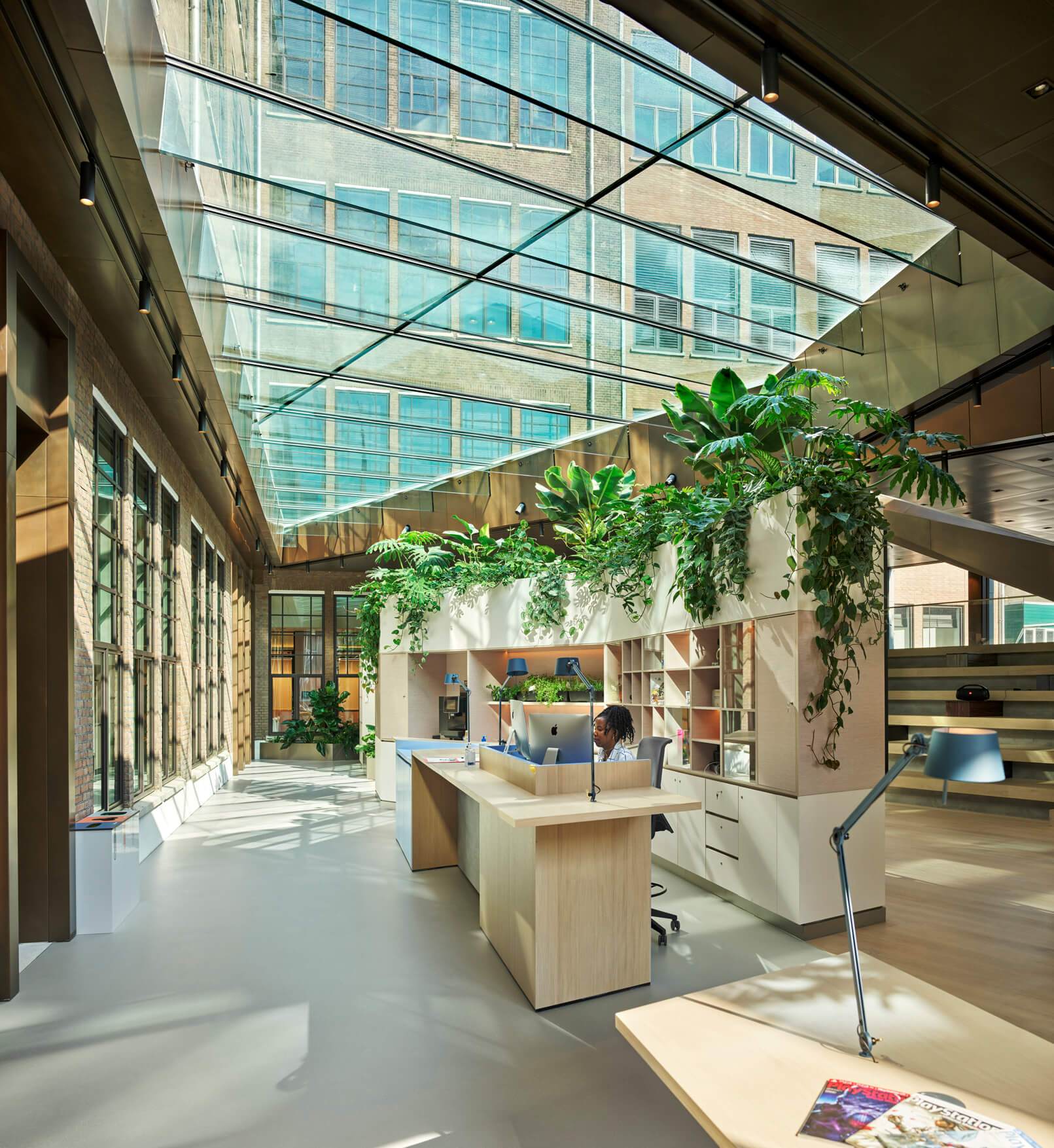
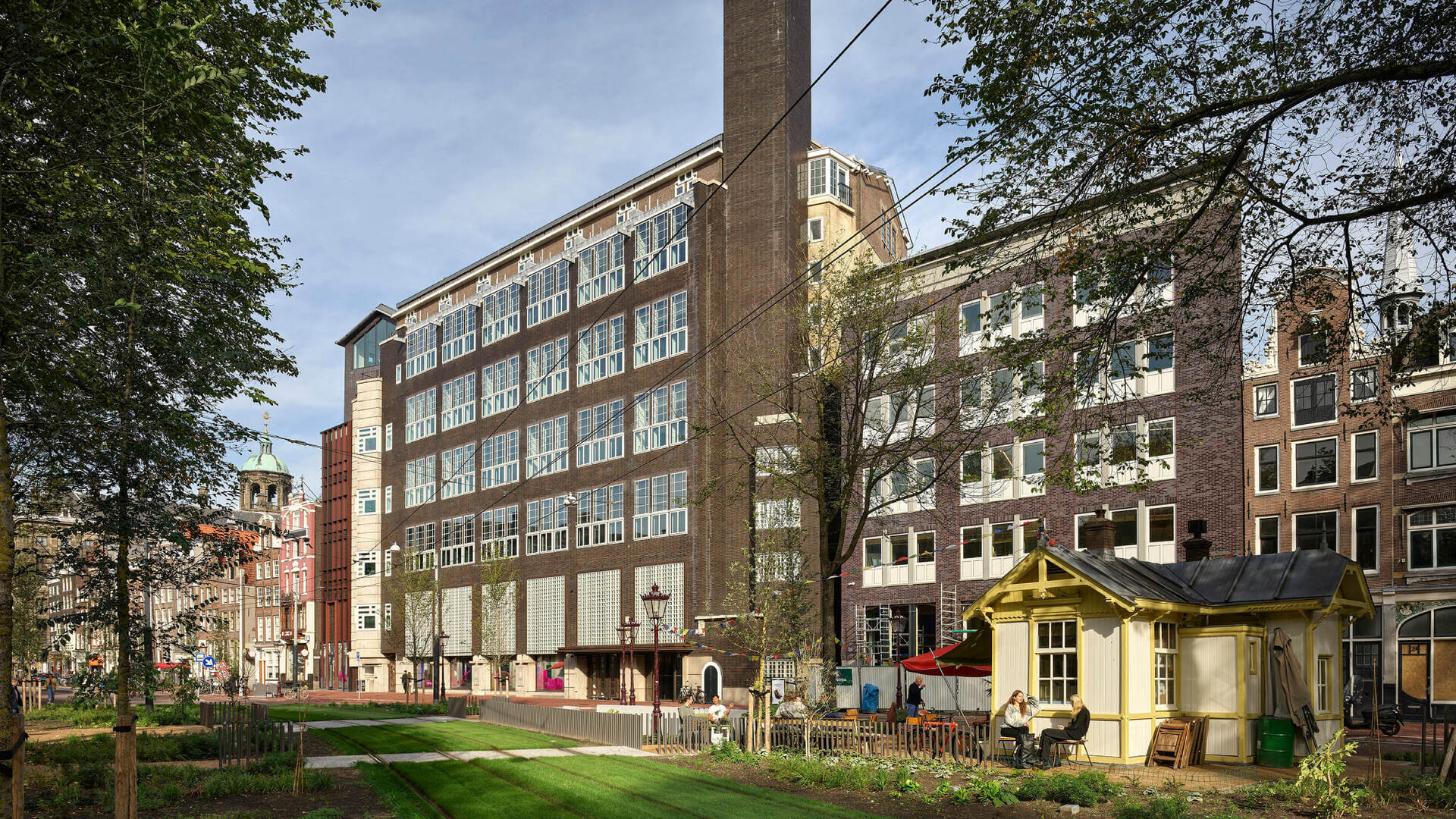
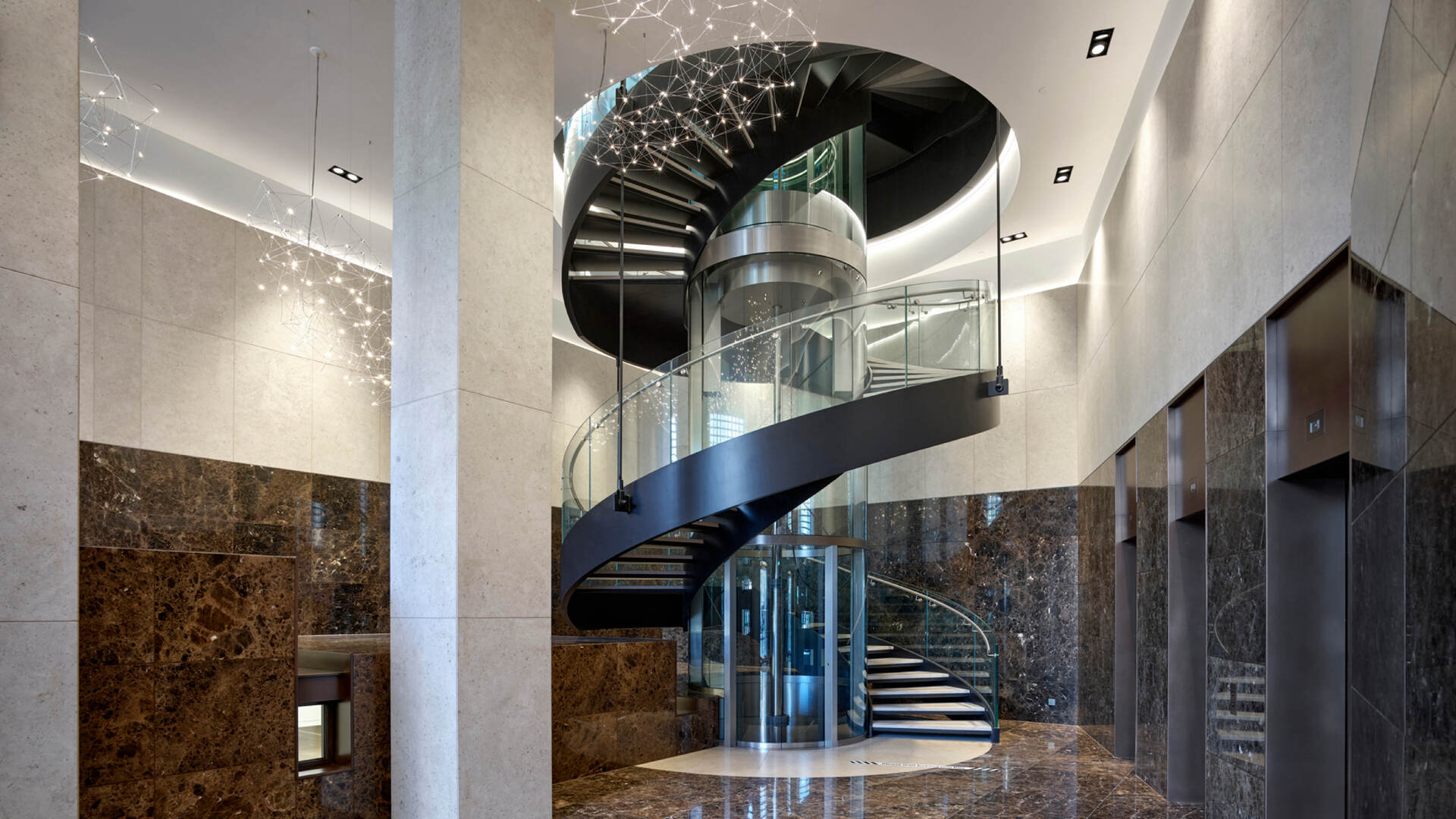
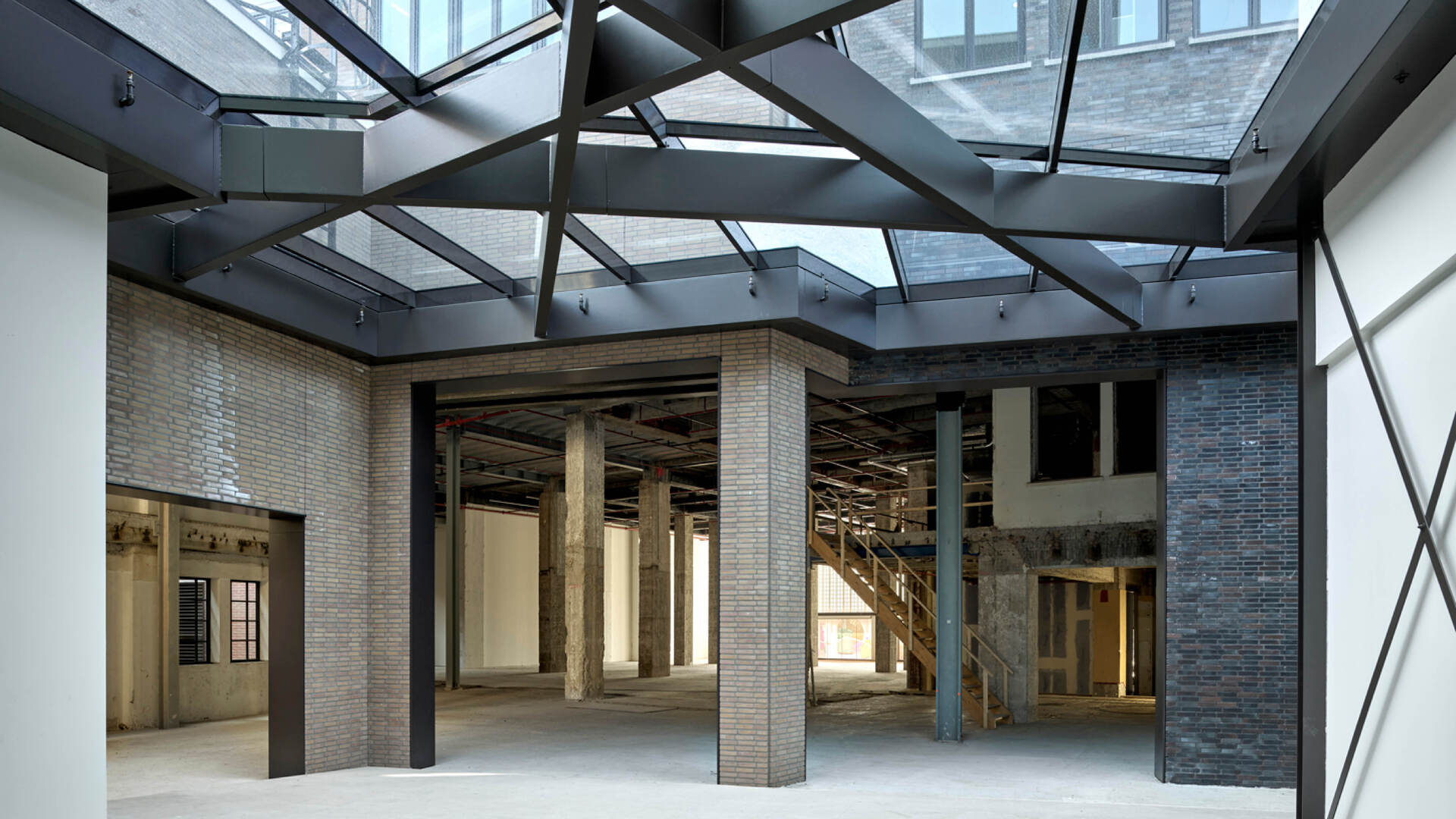
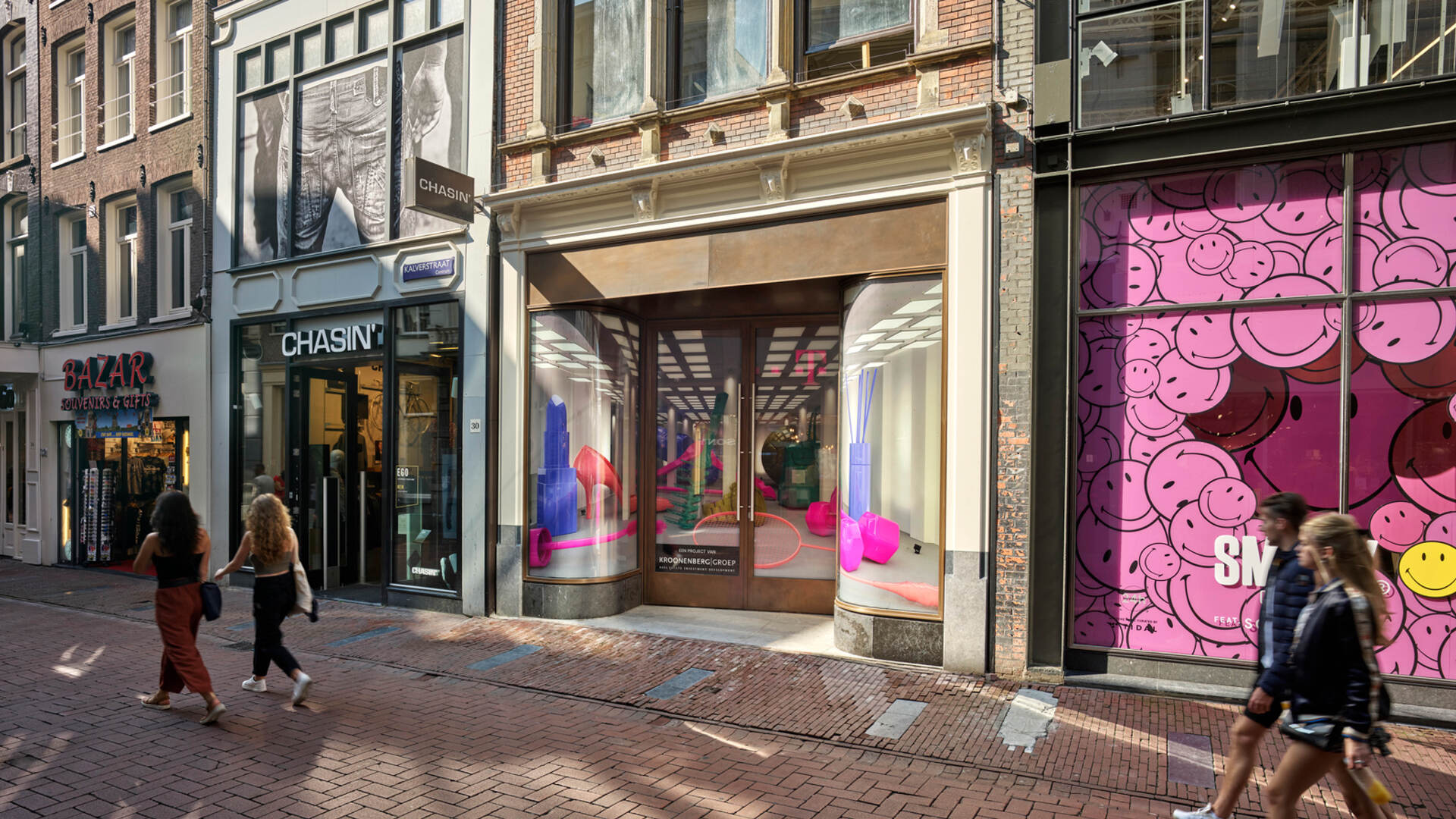
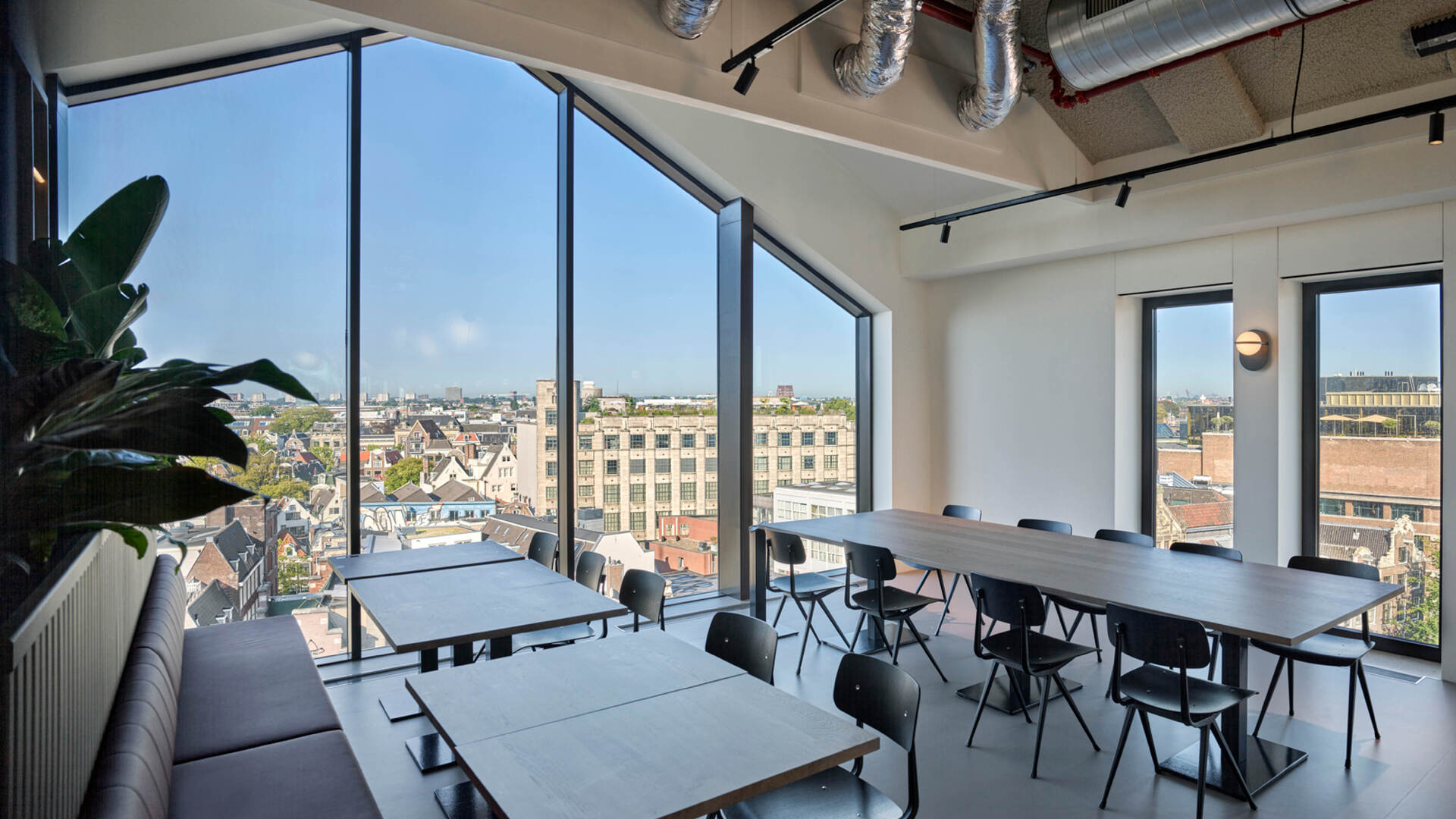
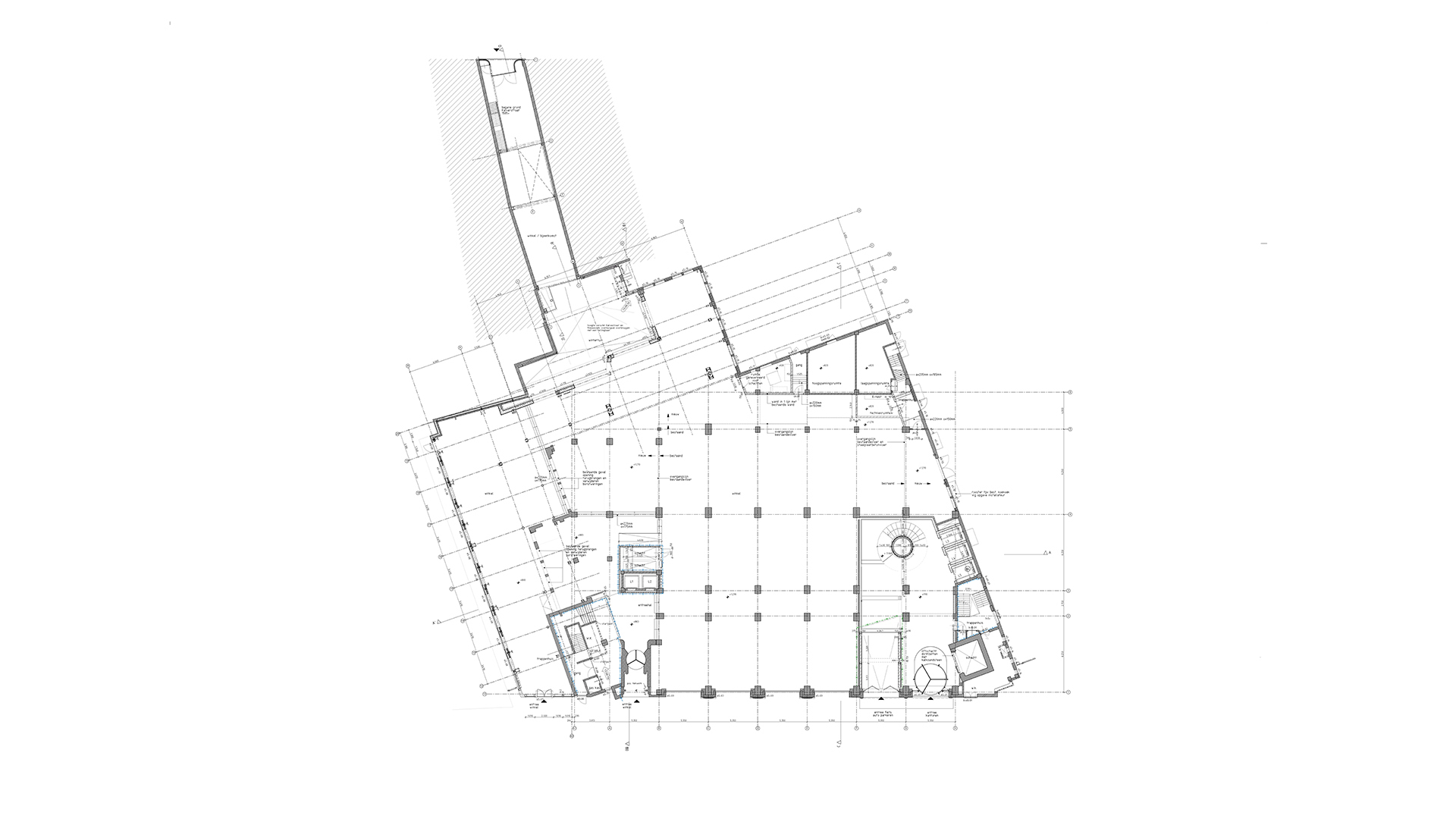
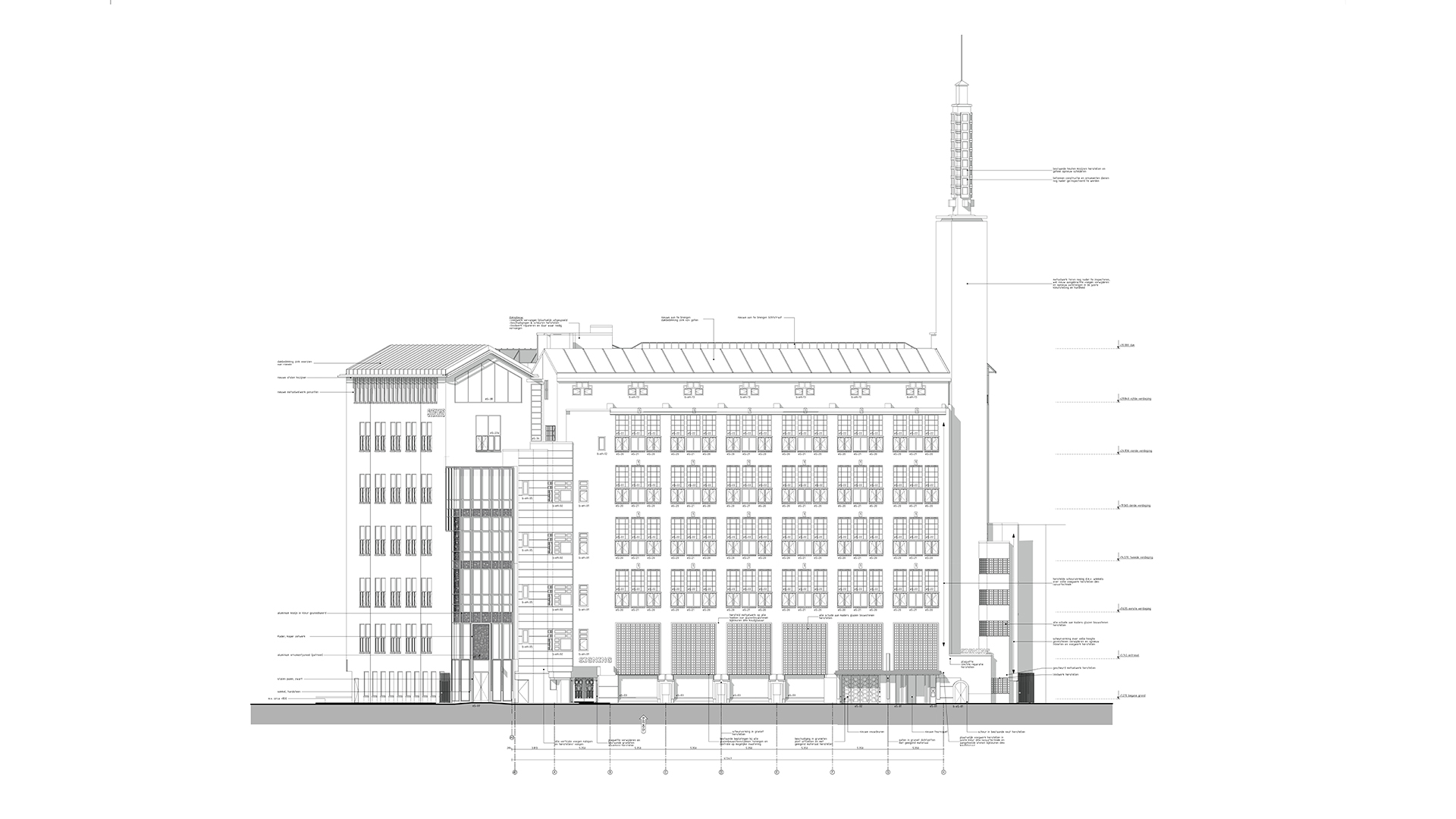
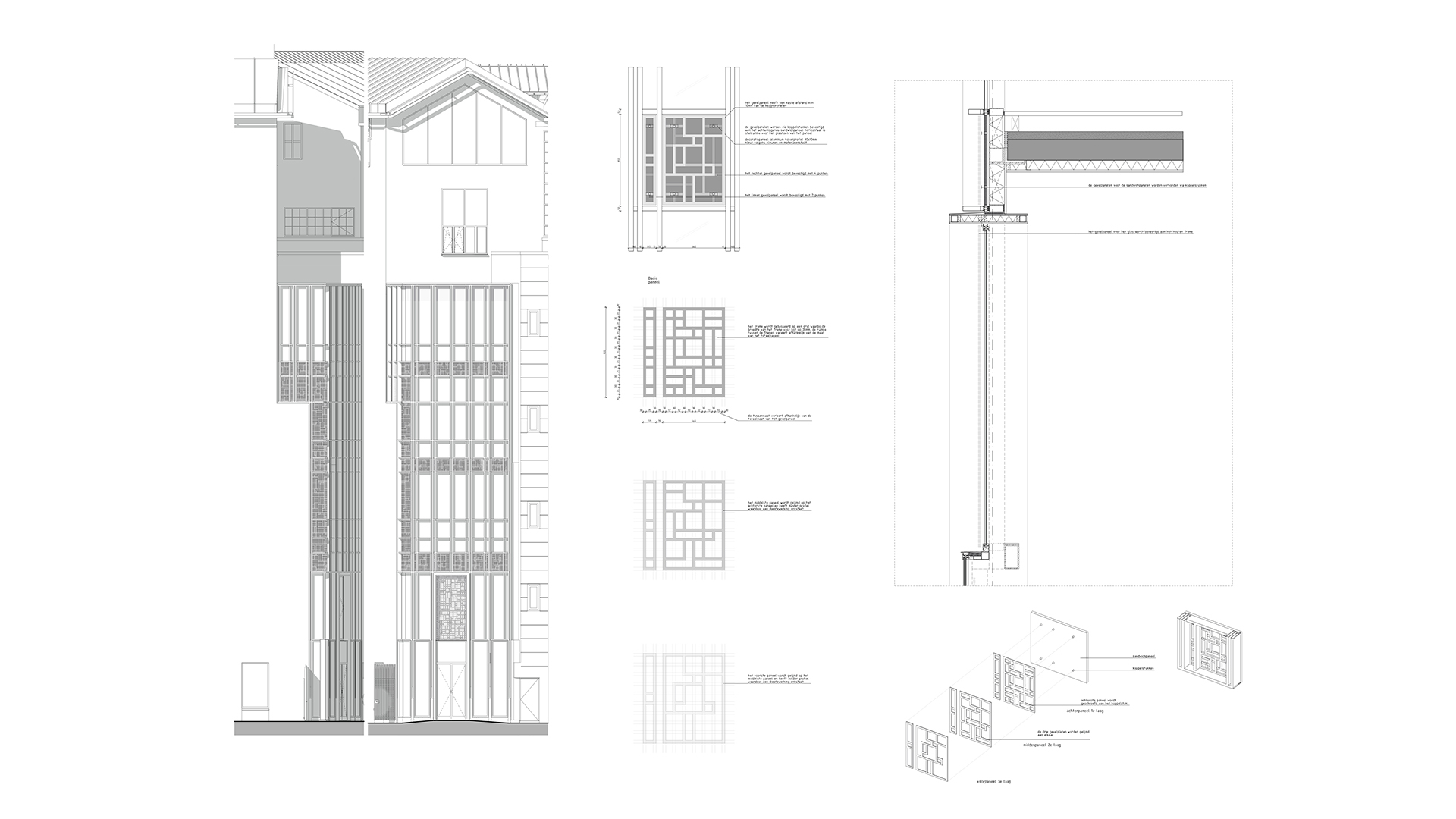
Commissioned by Kroonenberg Groep, the former headquarters and printing plant of De Telegraaf – a national monument dating from 1930 – was renovated and repurposed as sustainable, contemporary offices, retail space and residential units. Design firm Rijnboutt was responsible for the design of the transformation, while Boltt handled project coordination, the BIM strategy and the technical detailing.
the approach
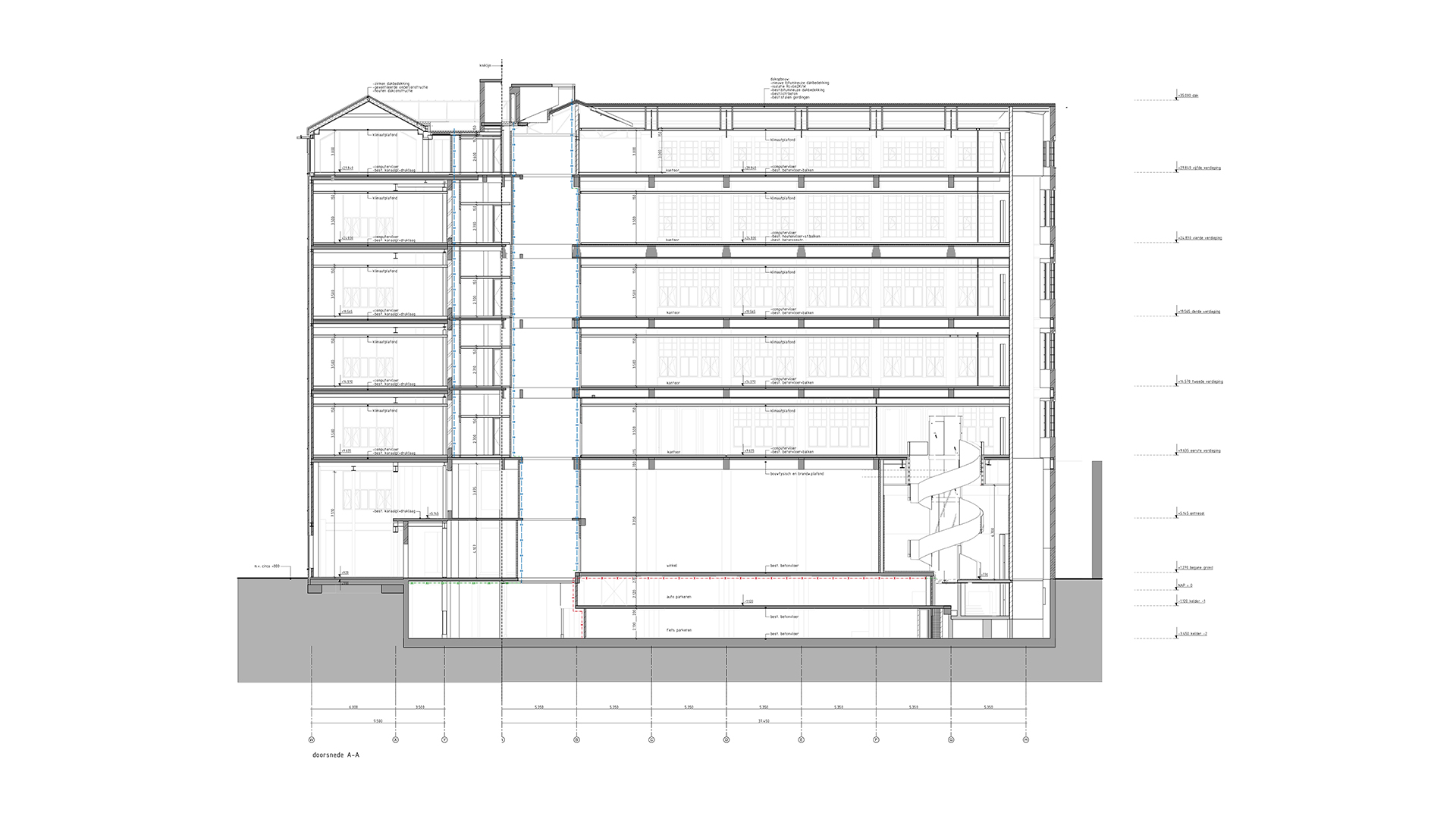
Using archival drawings, historical photographs, point clouds and drone imagery, the condition of the building was mapped at every level. This information was then incorporated into an integrated 3D model showing both the existing building and the proposed design.
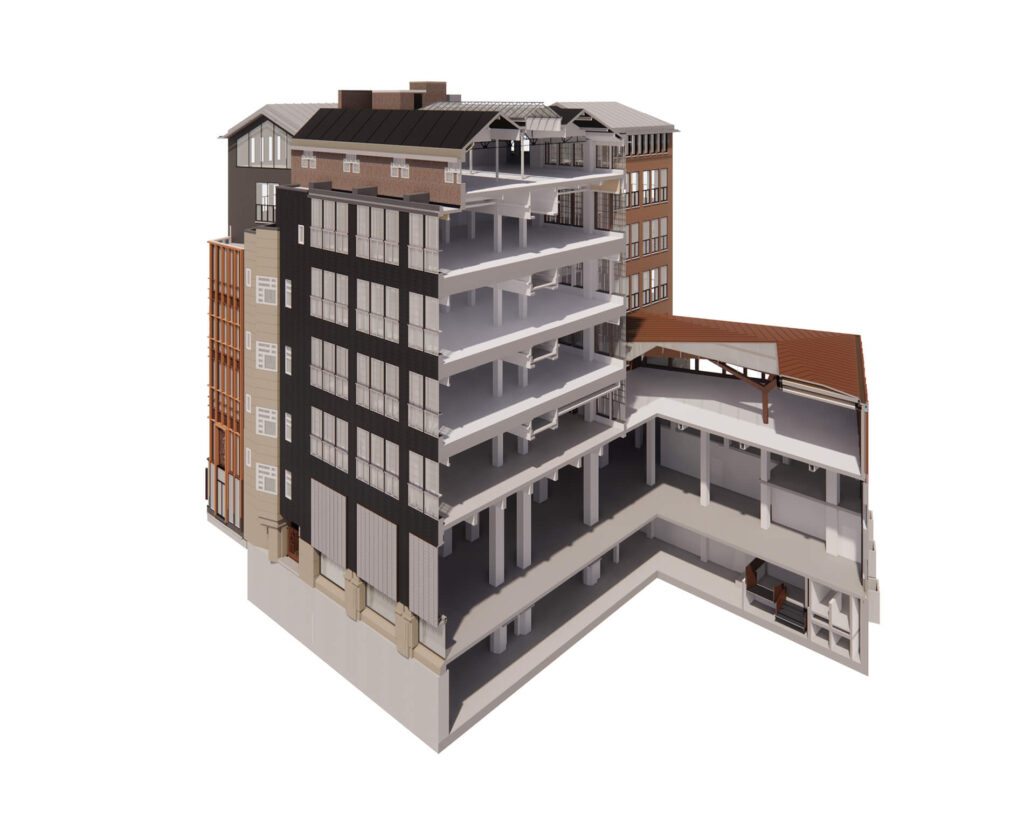
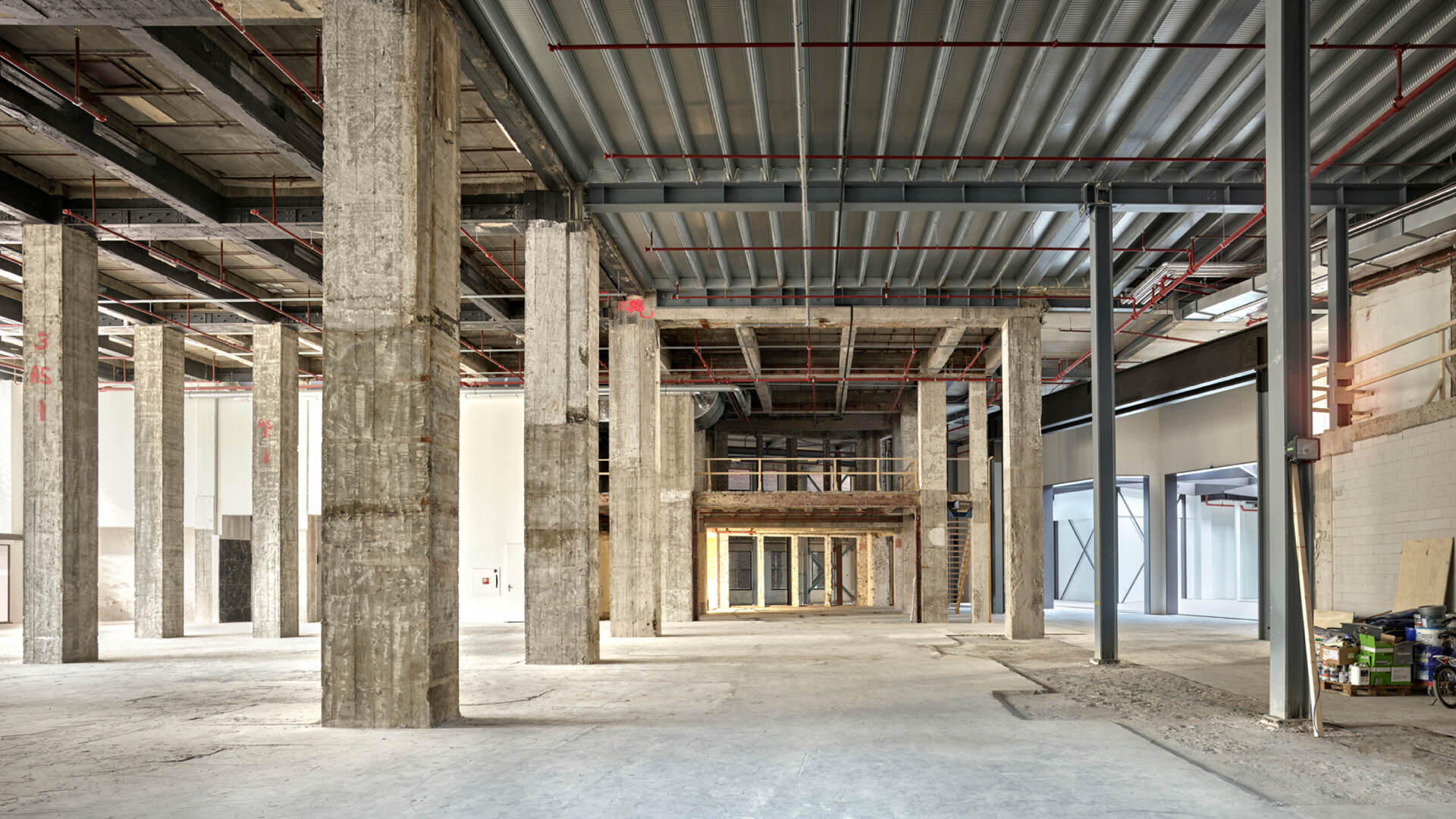
The structural engineer’s archival drawings formed the starting point for the model, while contractor BAM was involved at an early stage in producing 3D as-built surveys and point clouds. This made it possible to verify whether the level data in the point clouds corresponded with the archival drawings. Cross-sections through the point clouds also revealed the extent of the building’s tilt and whether individual components were out of plumb.
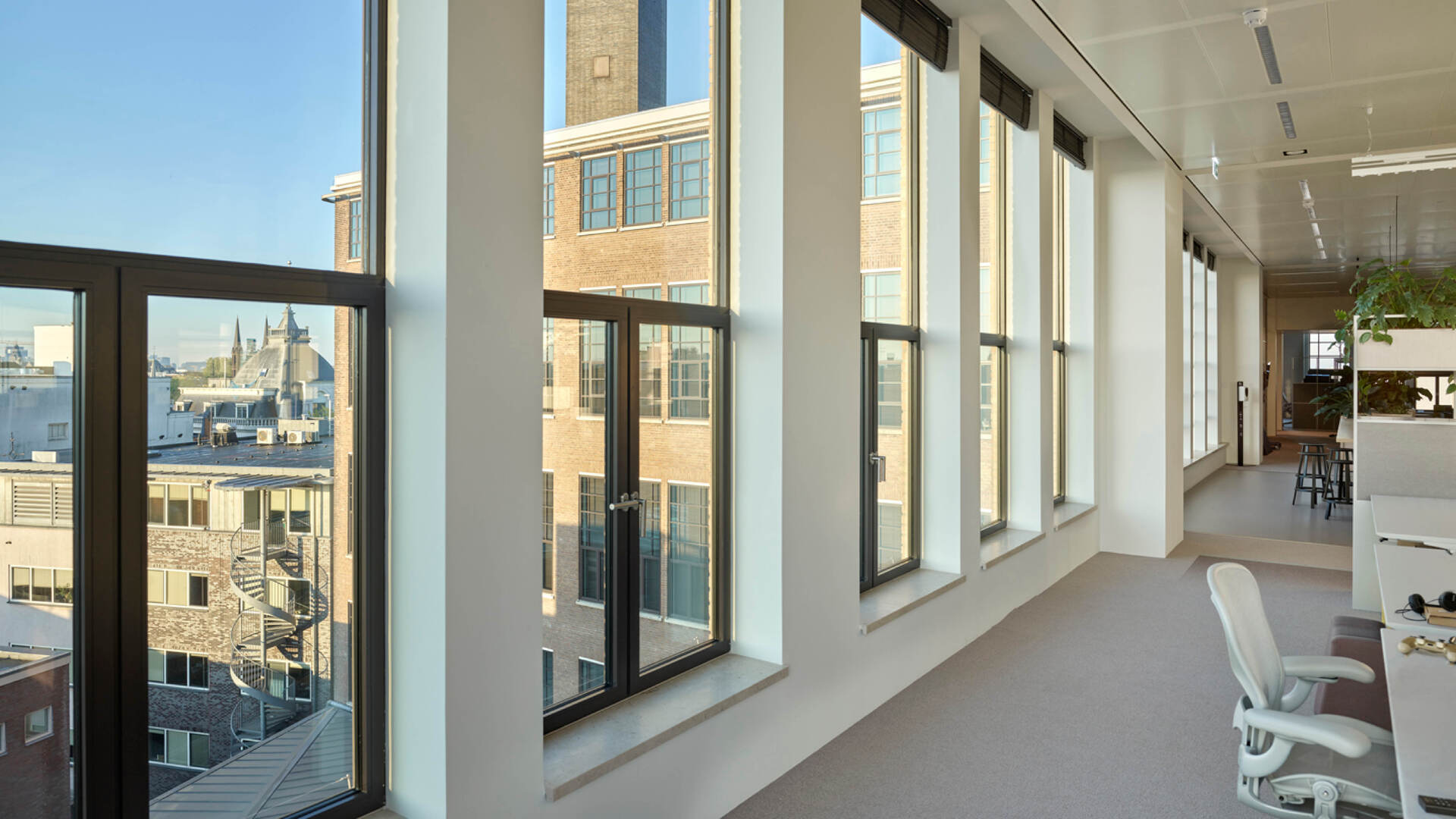
To gain a more detailed understanding of the building’s condition, we used high-resolution drone photographs of the full exterior. By comparing these with historical images and archival drawings, we were able to distinguish between original and later elements. This made it possible, for example, to determine that part of the first floor could be demolished. The historical material also helped identify elements that were not shown in the drawings, as well as details that had been replaced over time. One example is the steel windows with opening sections, which were reintroduced in the new design.
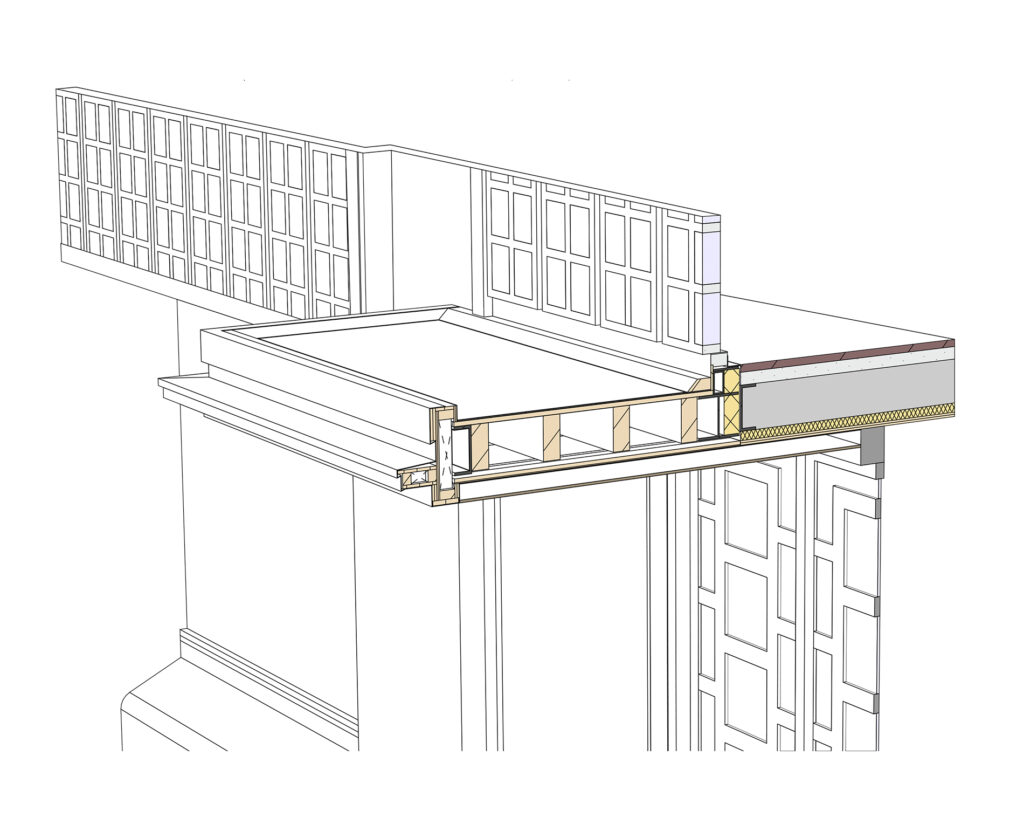
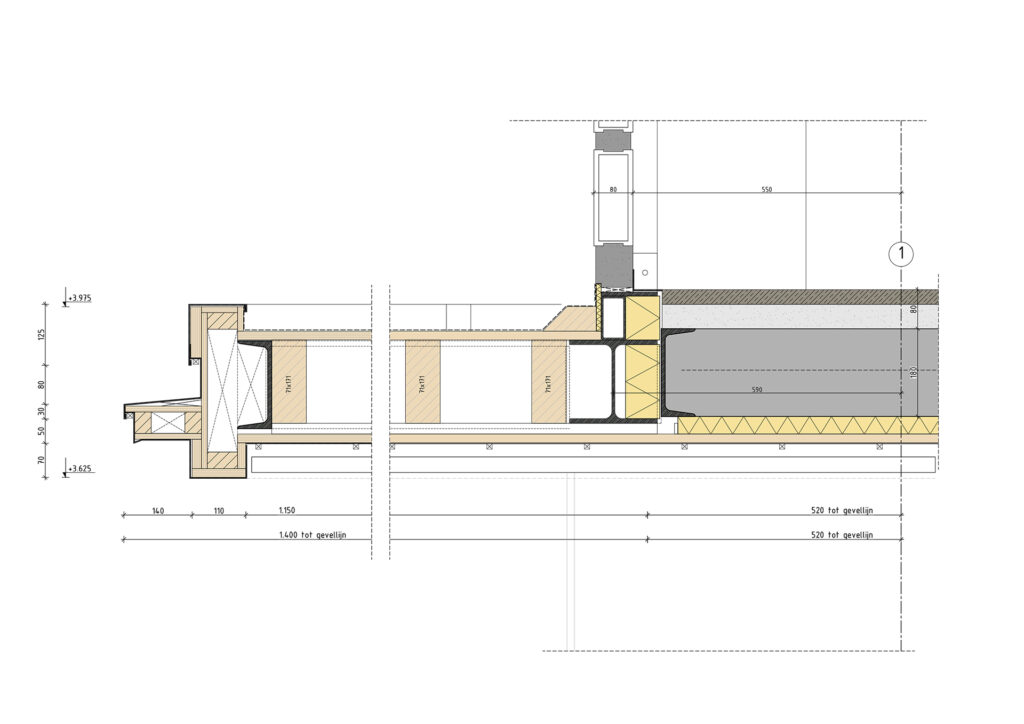
BIM was actively used as a communication tool between the contractor, architect, structural engineer and subcontractors. Using the Archicad renovation filter, we were able to clearly distinguish in the 3D model between existing elements, demolition work and new interventions. The same applied to load-bearing and non-load-bearing components, material properties, interior and exterior elements, and NL/SfB codes. The steel supplier also used the model as the basis for sizing its components.

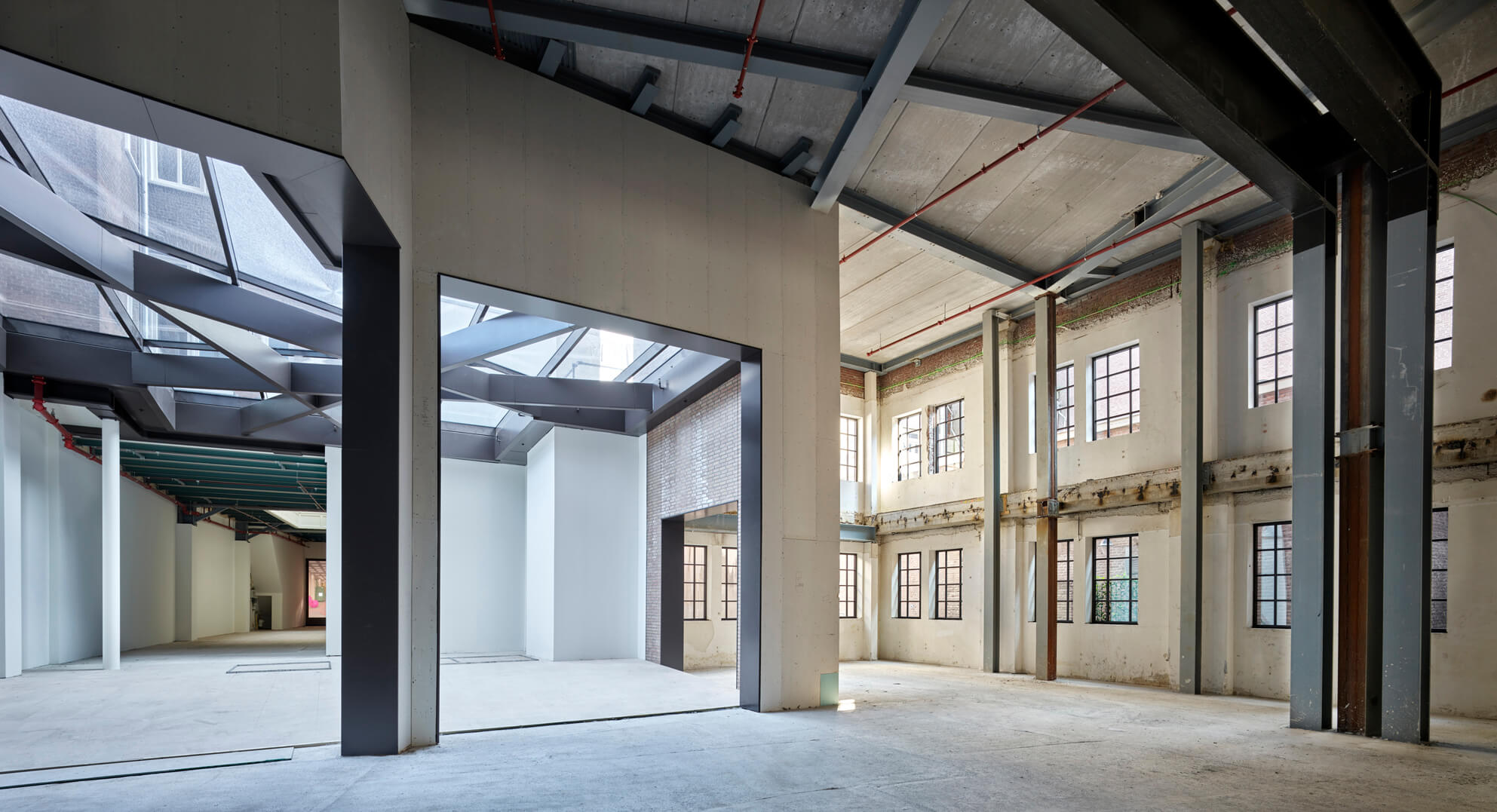
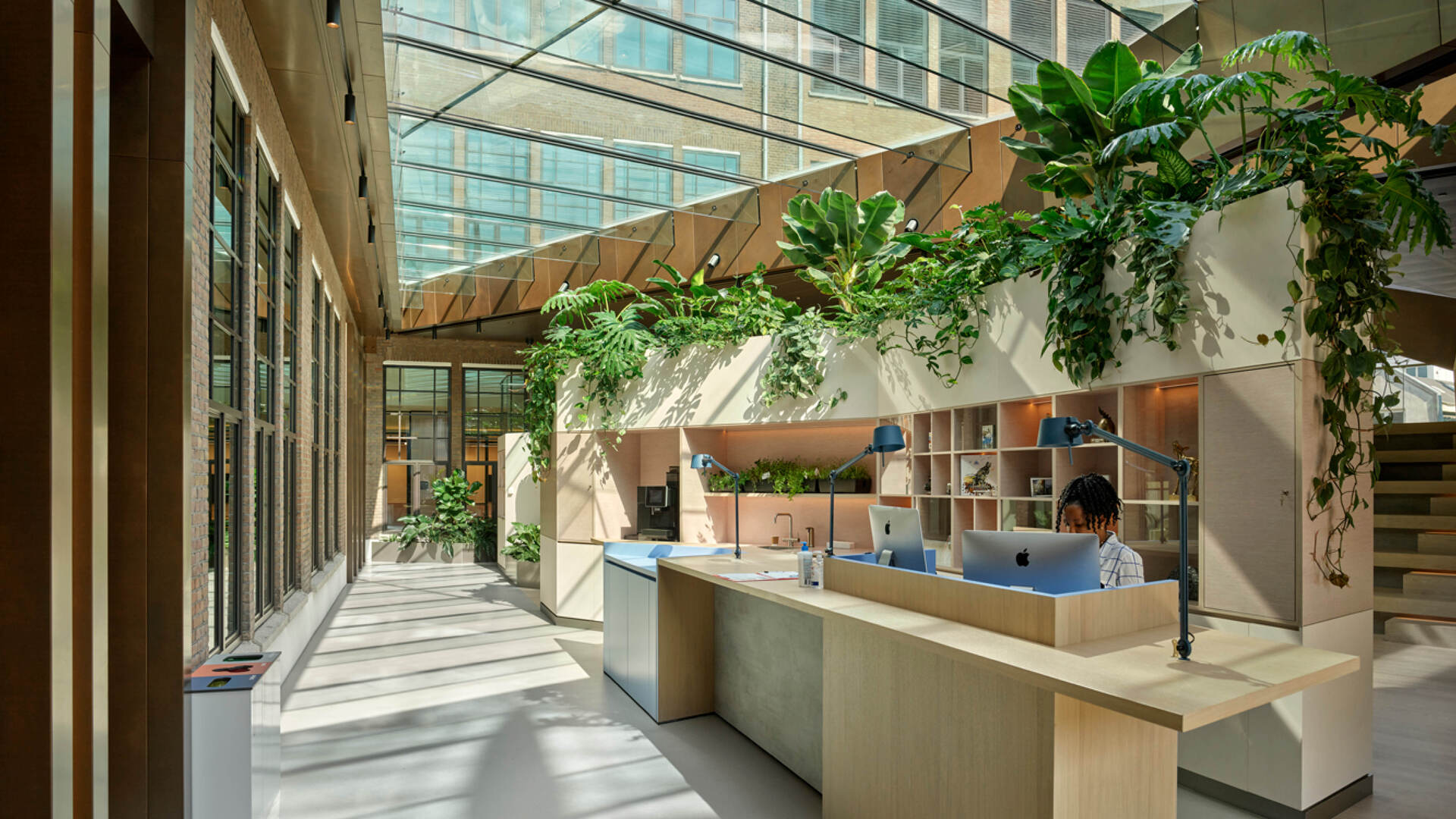
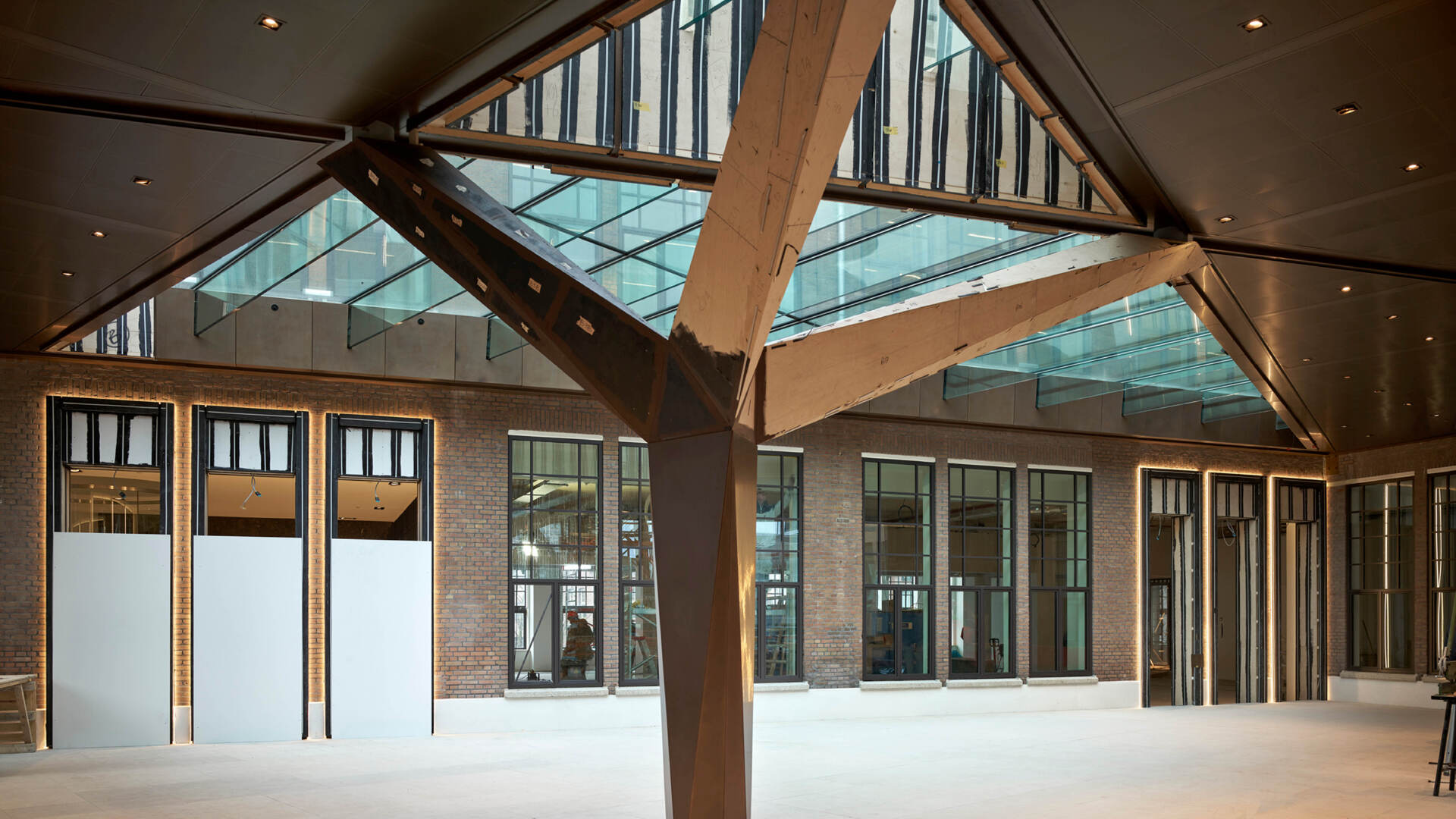
“I greatly enjoyed working on the technical design of the atrium and the winter garden. The tree-shaped column in particular was a rewarding challenge.”
Margret van den Broek, Senior Technical Designer at Boltt
The result
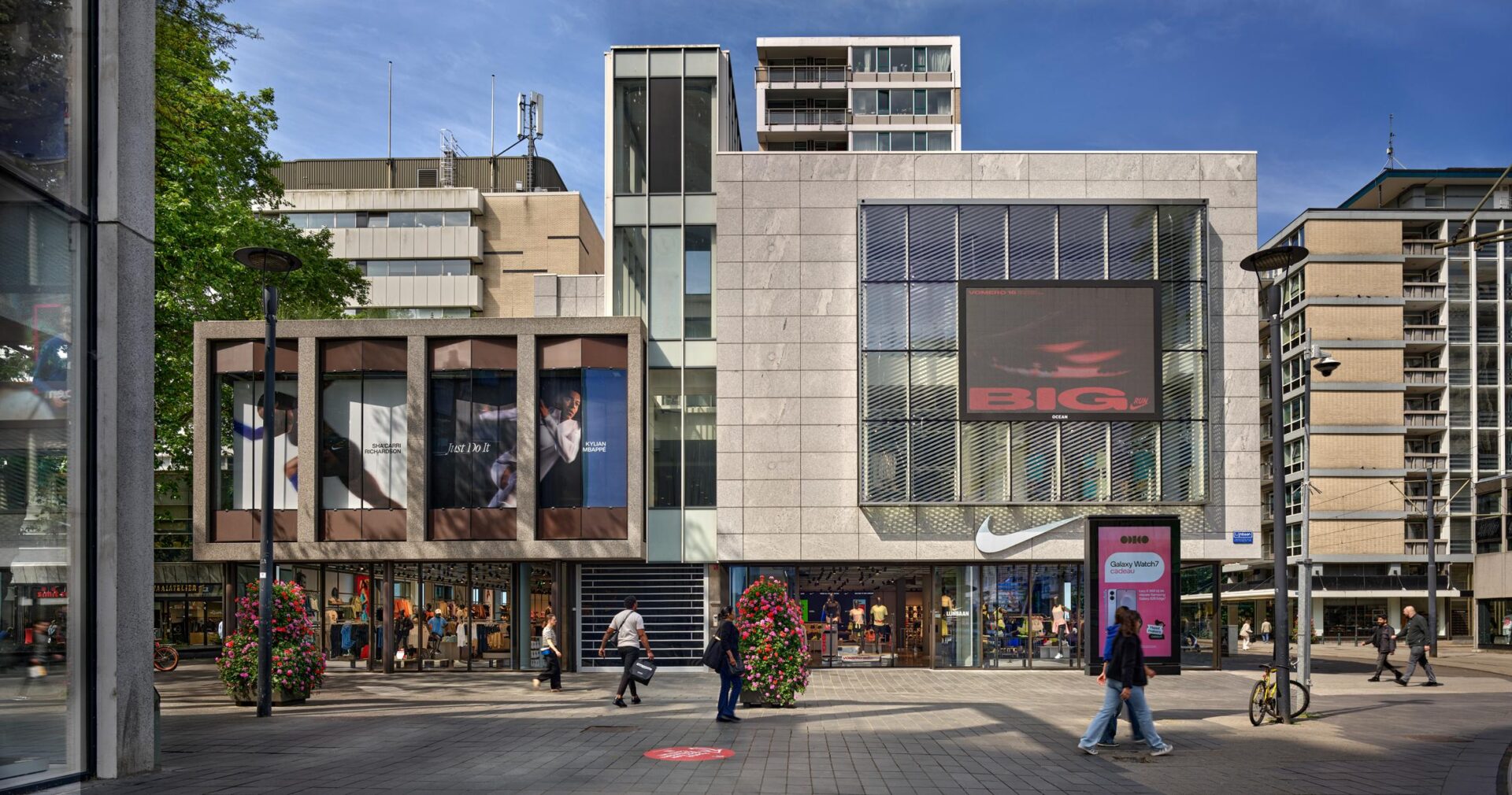
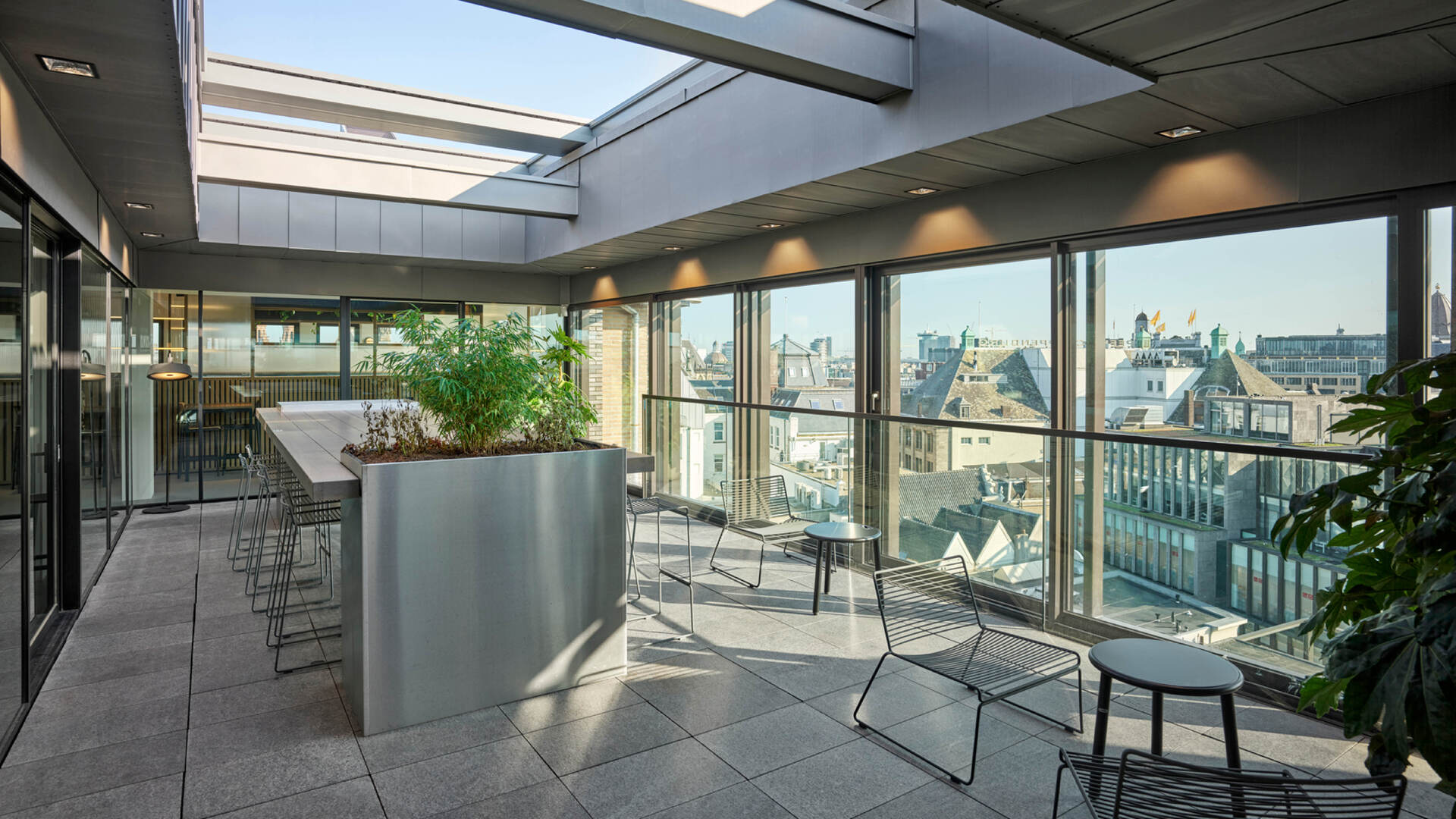
Although the building has been given a new mix of uses, the transformation has restored much of its original character.
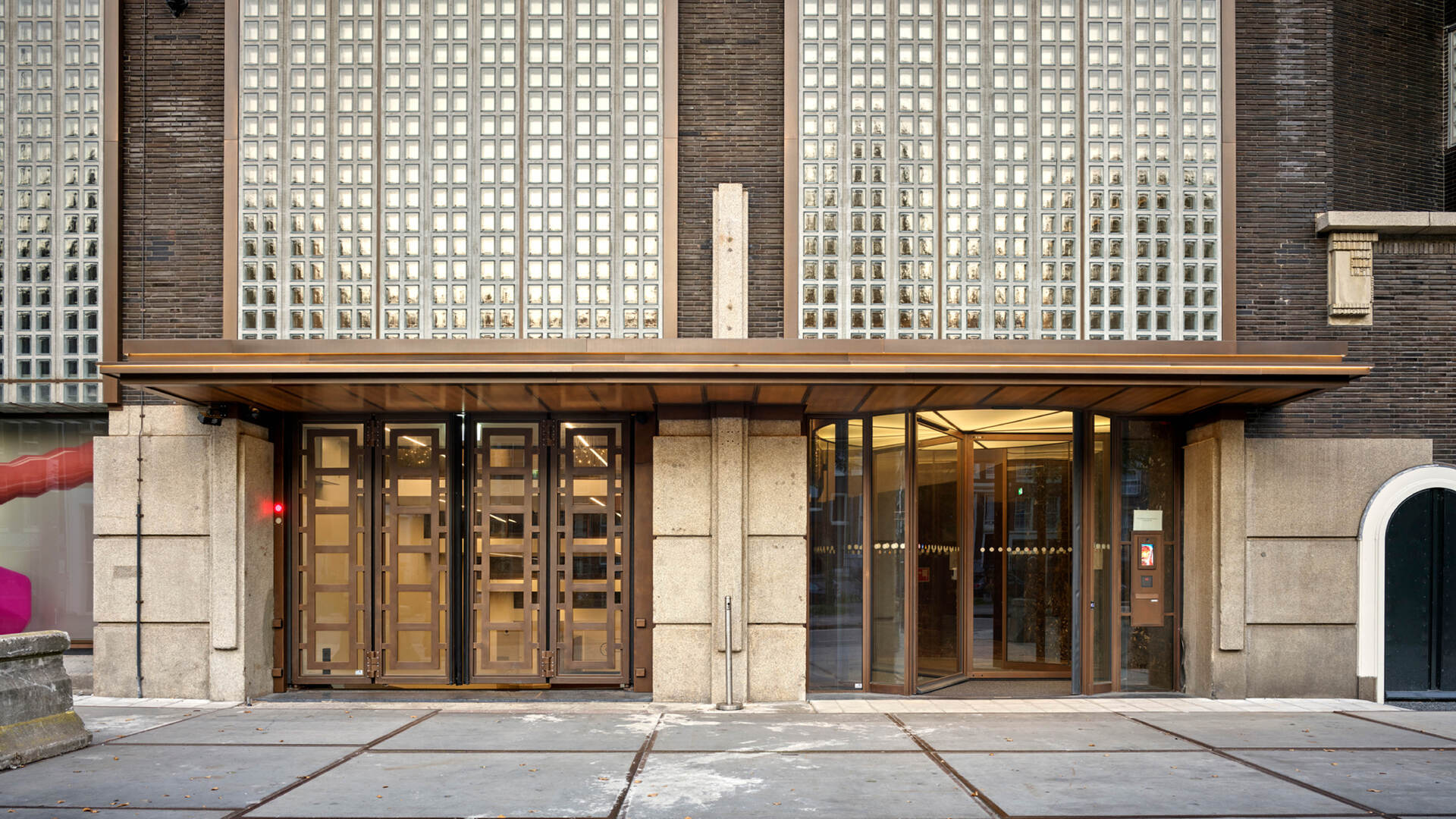
Attention was given to a number of historic details. The inward-tapering rectangular glass panes, for example, replaced later framed square panes. The canopy and ornamental railing were also restored. Although no drawings of these elements had survived, historical photographs made it possible to reconstruct the original detailing.
client
Kroonenberg Group
year
2016–2020
services
BIM Development
Plan Optimization
Project Coordination
Image
Photography by Kees Hummel
collaboration
BAM Bouw en Techniek bv, CBRE, IMd Consulting Engineers, Nelissen Engineering, Octatube, Rijnboutt, VB&t
Work out the details of the transformation?
Whether the project involves a historic building or an existing structure, we provide the technical detailing needed to support the transformation. Would you like to know more?
Call Jurriën at 06 – 14 85 35 74
Or feel free to email jurrien@boltt.nu

More work we're proud of at
{"post_type":"case","posts_per_page":"4","post_status":"publish","ignore_sticky_posts":true,"order":"DESC","orderby":"date","s":"","tax_query":[{"taxonomy":"service","field":"term_id","terms":[3,4,6,5]}],"post__not_in":[179]}